
 Sydney - Kingsgrove, NSW
 Melbourne - Clayton, VIC
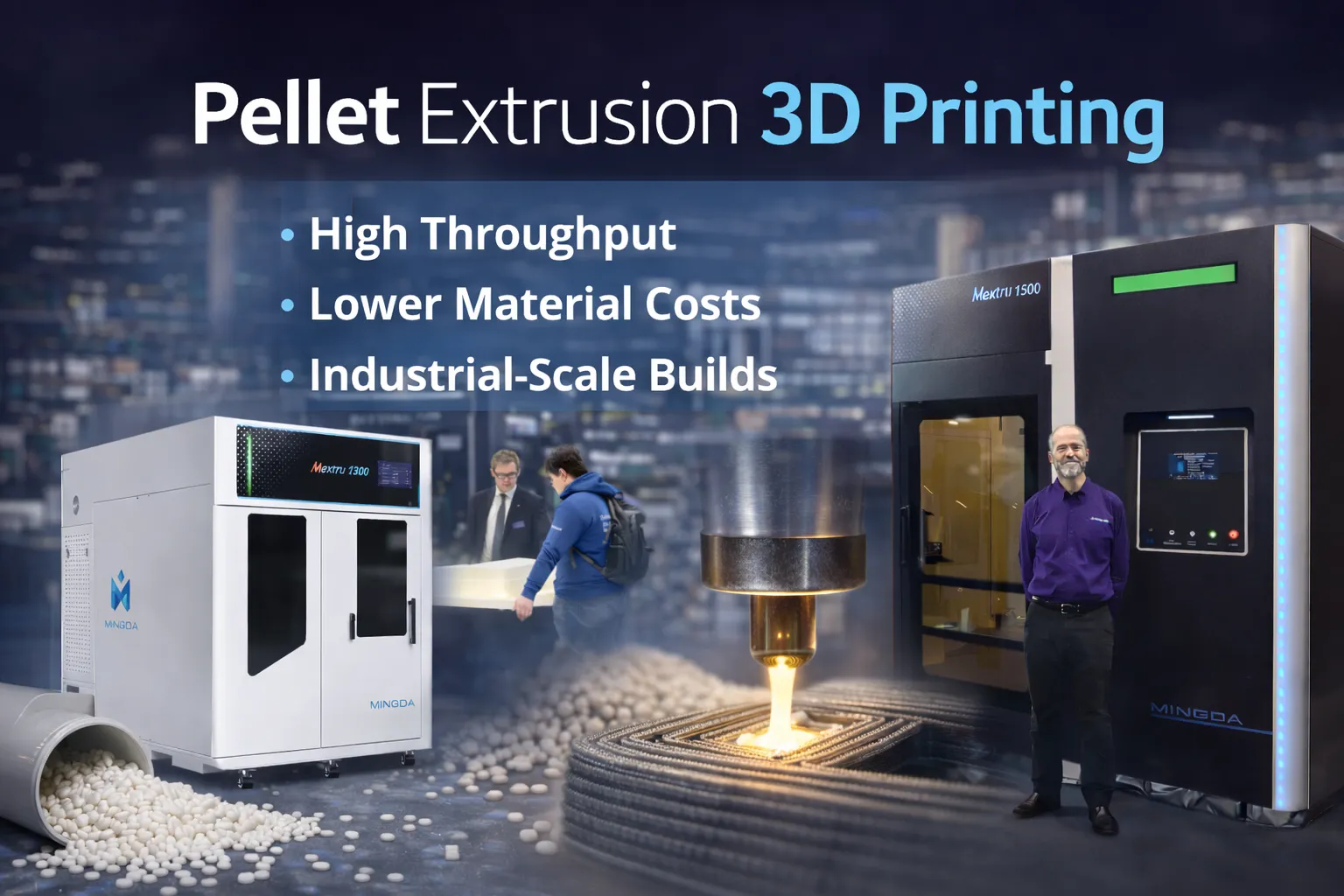
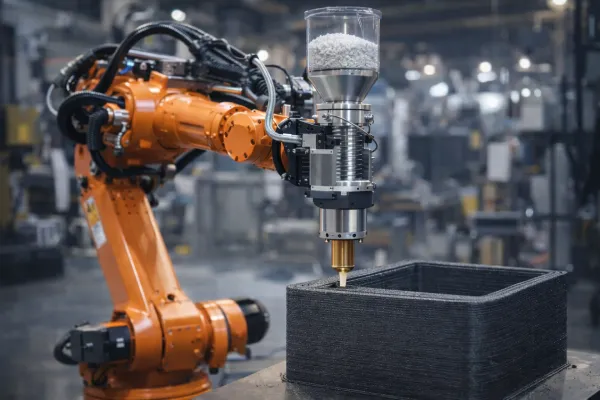
Pellet extrusion in Additive Manufacturing has been evolving for over 15 years. The concept is simple but powerful: take a downsized screw extruder—like those used in plastic injection molding—and mount it on a motion system, whether a Cartesian gantry, delta platform, or robotic arm. The result is a highly capable 3D printing system that can process thermoplastic pellets directly, enabling high deposition rates, access to a wider range of materials, and significantly reduced material costs.
These systems often use larger nozzles and higher layer heights to push through more material per hour . This boosts build speed but typically results in coarser surface finishes—an acceptable trade-off in many industrial applications where parts can be post-processed via CNC machining, chemical smoothing or polishing .
For those coming from an FDM (Fused Deposition Modeling) background, pellet-based MEX (Material Extrusion) offers a step change in scale, throughput, and cost-efficiency.
Note that there is no retraction as used on a filament machine, though some FGF machines do block the nozzle during transit. Transit between islands is done, but you will not see many photos of prints with them.
For those with experience in injection molding, much of the material handling—including pellet drying, feed rates, and melt zone control—will feel immediately familiar.
The screw-based extrusion system shares the same fundamentals as a traditional molding setup, just adapted for additive use.
In this article, we’ll explore what makes pellet extrusion different, compare real-world machine capabilities, and walk through the practical considerations—from terminology and materials to workflow, reliability, and installation requirements.
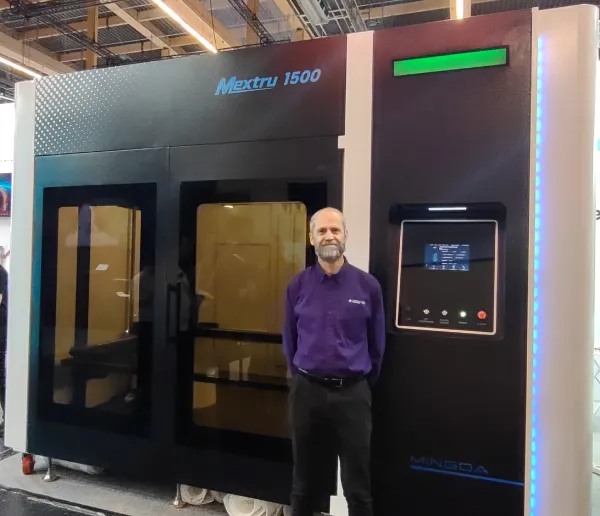
| Feature | Mingda Mextru1300 | 3D Systems EXT Titan | Stratasys Fortus 450mc |
|---|---|---|---|
| Deposition Rate | Up to 3 kg/hr | Up to 13.6 kg/hr | ~0.3–0.5 kg/hr |
| Feedstock | Open-pellet system | Open-pellet system (check licensing requirements) |
Proprietary filament (check licensing requirements) |
| Build Volume | Large format (varies by config) | 1270 × 1270 × 1829 mm | 406 × 355 × 406 mm |
| Material Cost | Low (bulk pellet) | Medium (bulk pellet) | High (proprietary filament) |
| Typical Use Cases | Tooling, Fixtures, Molds | Large-scale patterns, Prototypes | Functional prototypes, aerospace parts |
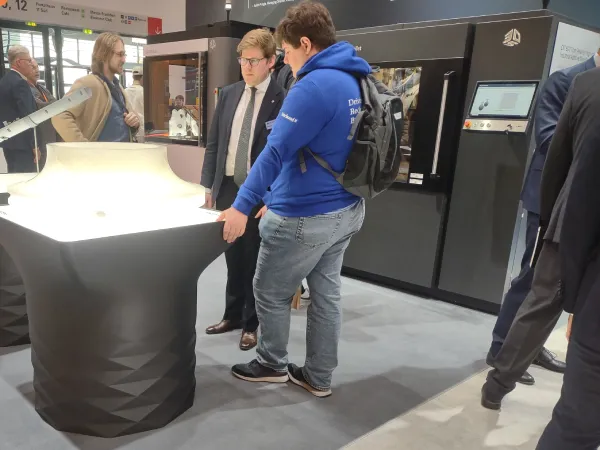
Compared to filament FDM, pellet systems require a deeper understanding of:
Pellets, as with all plastic processing, must be dried before printing, particularly for hygroscopic materials (like Nylon or PC). A dedicated pellet dryer is highly recommended.
Drying cycles of up to 8-10 hours before loading into the machine is recommended, unless the pellets are supplied with a known moisture content and in sealed containers.
Consider a sealed cabinet or drying tower for optimal results.
Mingda supplies pellets in 25 kg bags, around 8 hours supply.
Facilities should allocate space for material immediately accessible from the machine, clearly labeled and sealed to prevent moisture ingress.
Sealed material should be allowed to equalise in temperature with the machine location before unsealing, to slow moisture ingress.
Sealed storage bins or silos may be used in production environments.
If the machine is not be be used for any more than a few hours, it should be cleaned out and material sealed and stored.
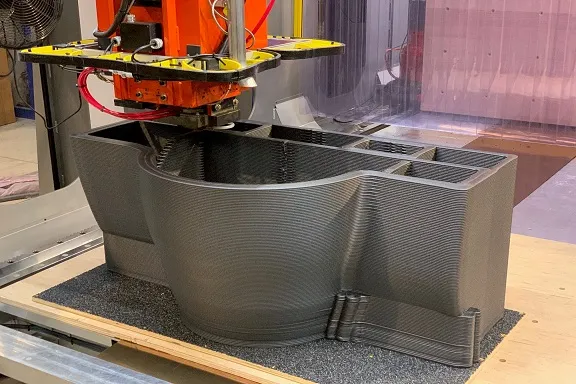 Air-Tech USA produces both Kimya Filament and Dahltram® Pellets with a focus on large moulds for composite layups
Pellet printing transforms additive manufacturing into an industrial-scale process. Compared to filament systems, the advantages are clear for large-format production:
For organisations already leveraging FDM, MEX with pellets offers an upgrade path to true digital manufacturing—provided the facility and staff are prepared for industrial-grade equipment and processes.


