
 Sydney - Kingsgrove, NSW
 Melbourne - Clayton, VIC
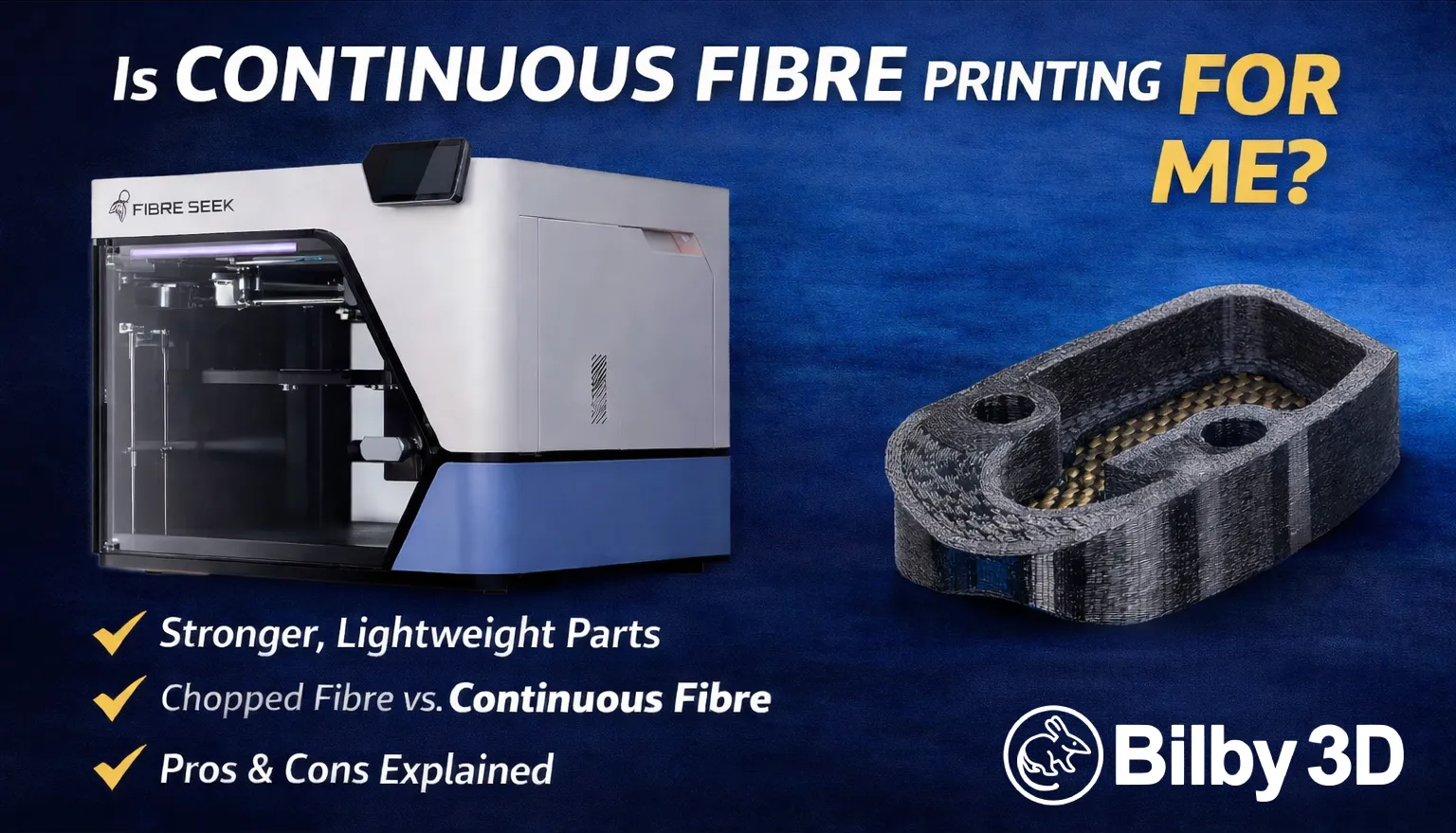
What SMBs need to know about continuous fibre reinforced 3D printing — pros, cons, real‑world expectations, and where the FibreSeeker3 fits.
Additive manufacturing has matured fast. For years, small and medium businesses have relied on chopped‑fibre filled filaments (e.g., carbon‑filled PLA/PA) and high‑performance thermoplastics to push the limits of FDM/FFF printing. Now, continuous fibre composite (CFC) or continuous fibre reinforced 3D printing (CFRP) promises a step‑change in strength and stiffness — especially where weight, mechanical performance, and functional prototyping matter.
If you’re wondering “Is continuous fibre printing for me?”, this article will cut through the hype and ground you in what’s real, what’s useful, and where limitations still exist — with a clear look at the FibreSeeker3 from Bilby 3D.
Traditional 3D printing with filled filaments mixes chopped fibres (short lengths of carbon, glass, or basalt) into a thermoplastic base. These short fibres typically align with the direction of nozzle travel, offering directional reinforcement. However, their short length limits how much load they can carry — strength gains plateau beyond a point.
Continuous fibre printing takes a different approach: it embeds long, aligned fibres (e.g., carbon, glass, basalt) directly into the print path where you choose, delivering much stronger reinforcement in key load paths — in essence, like placing rebar in a concrete beam.
The FibreSeeker3 uses a refined co‑extrusion system — based on Anisoprint technology — to embed fibre continuously through the thermoplastic matrix.
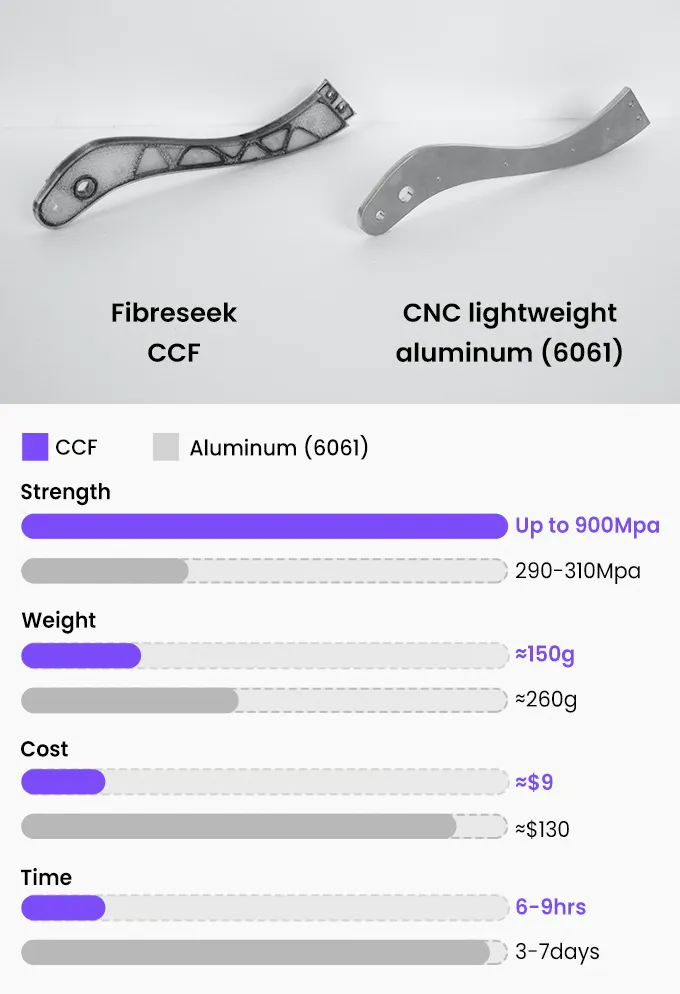
Verdict: FibreSeeker3 is a smart alternative for those wanting performance, freedom, and local support — especially in Australia.
Chopped carbon or glass-filled filaments reinforce parts by aligning fibres with the nozzle’s path — offering meaningful stiffness gains. However, fibres are short and do not bridge layers well. Continuous fibre excels in longitudinal reinforcement but also faces limited Z-axis strength.
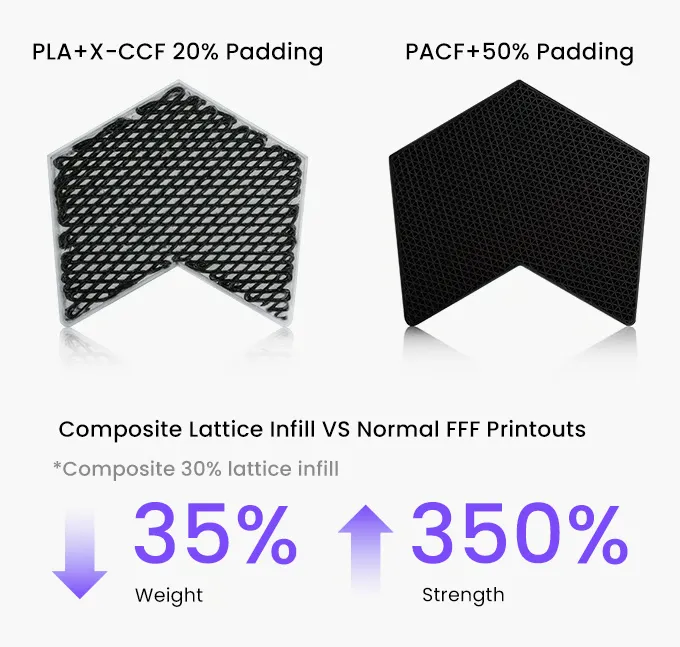
Layer adhesion remains the weakest point in FFF printing. Both fibre types face limitations here — except for standout materials like Polymaker Fiberon PA6-CF.
FibreSeeker3 allows printing with chopped-fibre model material (like PA-CF) while embedding continuous fibres for structural reinforcement. This hybrid approach enables:
Continuous fibre printing won't magically turn a basic print into a machined metal part — but it does offer a major leap in performance when used with the right base polymers and design strategies.
Used correctly, it delivers:
But remember:
FibreSeeker3 supports a broad range of open materials, including:
This gives you flexibility to match base polymer properties with fibre reinforcement — combining chemical resistance, toughness, and heat performance with strategic structural strength.
YES:
MAYBE NOT:
With its Anisoprint-derived co-extrusion tech, open materials, and competitive pricing, the FibreSeeker3 is designed to bring high-strength composites into everyday use for SMBs.
Backed by Bilby 3D’s Australian service and support, it offers a powerful, flexible toolset for businesses ready to take the next step in additive manufacturing.
Founder, Bilby3D
Chris Bilby founded Bilby3D in 2011 and has spent more than 15 years helping Australian businesses, schools, universities and manufacturers adopt additive manufacturing technologies. With an engineering background and extensive hands-on experience, he has personally installed, configured, serviced and trained customers on hundreds of professional 3D printers and 3D scanners.
Under Chris's leadership, Bilby3D has supplied thousands of additive manufacturing systems across Australia. Chris has completed manufacturer training in Germany, England, China and Thailand, and regularly evaluates emerging 3D printing technologies, materials and workflows to provide practical, experience-based advice.
Connect with Chris on LinkedIn.


