


 Sydney - Kingsgrove, NSW
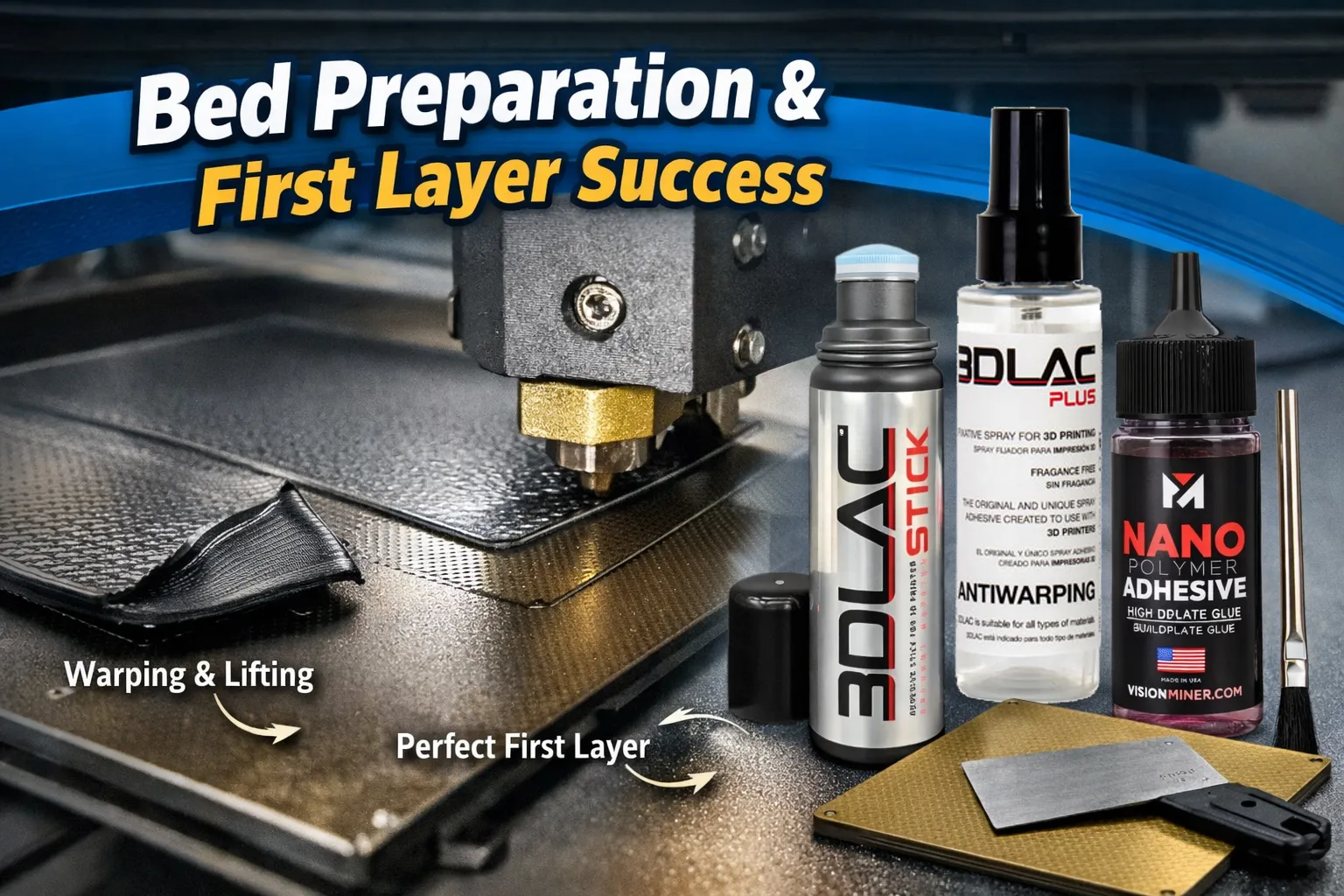
Bed Preparation & First Layer Success
by Bilby3D
The first layer is the foundation of every successful print. Poor adhesion leads to warping, lifting, failed supports, or complete detachment — no matter how well your slicer is tuned or your filament is dried . This guide covers everything you need to know to get that first layer down right, every time.
Why Bed Prep Matters
Whether you're printing PLA or carbon-filled Nylon, first layer success depends on three things:
- A clean and well-prepared print surface
- The right adhesive (if needed)
- Correct bed temperature and slicer settings
Cleaning and Preparing the Bed Surface
Fingerprints, dust, oil, and residue can all prevent prints from sticking. The right cleaning method depends on your bed surface:
- PEI Coated or PEI Sheet Surfaces: Clean with Isopropyl Alcohol (IPA). Avoid acetone — it can damage the PEI.
- BuildTak and similar textured surfaces: Clean with a soft damp cloth. If needed, use a mild soapy solution. IPA as a last resort. Never use acetone — it will destroy the surface.
- Installing Adhesive Sheets (PEI Tape, BuildTak): Use Rapid Tac to reposition and remove bubbles. Bubbles can expand with heat and cause prints to lift.
When to Use Bed Adhesives – and Which One
Some filaments need extra help sticking to the bed, especially in dry climates, drafty rooms, or with high-temperature materials:
| Adhesive | Recommended For | Product |
|---|---|---|
| Glue Stick (PVA) | PLA, PETG on glass or PEI | PVA Glue Stick (water based) |
| 3DLac Original | PLA, PETG, basic adhesion | 3DLac |
| 3DLac Plus | Stronger hold for PETG, PC | 3DLac Plus, 3DLac Stick |
| VisionMiner Nano Polymer | Nylon, Carbon-Fibre, ABS, PC | Nano Polymer Adhesive |
| 3DLac Nylon | Nylon / PA | 3DLac Nylon |
| Packing Tape or Specialised PP beds | PP | PP only sticks to itself, so packing tpae. Replace every print |
Bed Temperature Guidelines
Using the right bed temperature helps soften the first layer and improve adhesion.
| Material | Bed Temp | Notes |
|---|---|---|
| PLA | 50–60°C | Usually sticks well; use glue for extra security |
| PETG | 70–90°C | May stick too well — use glue to prevent damage |
| ABS / ASA | 90–110°C | Needs high temp and enclosure to prevent warping |
| Nylon (PA) | 60–80°C | Use Nano Polymer or slurry; prone to edge lift |
| PC (Polycarbonate) | 100–120°C | High hold required; use strong adhesive |
| TPU | 40–60°C | Low temp; needs clean bed, slow speed |
Slicer Settings to Help Your First Layer
- First Layer Height: Increase for better adhesion tolerance (e.g., 0.2–0.3 mm)
- First Layer Speed: Slow down (20–30 mm/s recommended)
- First Layer Flow: Slightly over-extrude (105–110%)
Platform Additions:
- Brim: Extra material around outside of part base. Prevents edge lift.
- Raft: Used for tricky materials or uneven beds. Extra thick, hot and slow initial layers than peel off after printing
- Helper Discs: Small tabs printed near corners to hold large prints down. Works well for ABS and Nylon.
Common Problems and How to Fix Them
- Lifting Corners: Check bed level, increase platform additons, use better adhesive. Closure your printer - a draft from one direction will cause your print to lift on that edge. Bilby3D only sells fully enclosed machines where possible for this reason.
- Poor adhesion: Clean bed, increase temp, check first layer gap
- Too strong adhesion (PETG, TPU): Use glue as a release layer
- Bubbles or warp in adhesive sheets: Apply with Rapid Tac
Recommended Products from Bilby 3D
- Isopropyl Alcohol (IPA)
- Nano Polymer Adhesive (VisionMiner)
- 3DLac Original and 3DLac Plus
- Rapid Tac for Adhesive Sheet Application
- PEI Build Surfaces and Scrapers & Tools

Summary Checklist
- ✔ Clean surface appropriately (no acetone on BuildTak!)
- ✔ Choose the right adhesive for the material
- ✔ Use correct bed temperature
- ✔ Adjust slicer settings for first layer flow and speed
- ✔ Consider a brim, raft, or helper discs
- ✔ Level the bed before critical prints
- ✔ And, of course, always start with dry filament
More Articles
